Monday, 17 September 2012

A Couple of Days in Århus (Aarhus)

Aarhus is a pretty seaside town on the Jutland peninsula in Denmark and it's the second-largest city after Copenhagen. Primarily it's considered a university town, with the main tertiary institution here having around 50,000 students - young people are everywhere we look and there is a certain vibrancy which comes as a natural result of that. This has been a very worthwhile side-trip in our visit to Denmark.

Mollestien is a quaint cobblestoned street in the centre of Aarhus, made up of tiny little houses, mostly well-maintained and waiting to be photographed! We are staying in a hotel, which is OK, but we met a lady yesterday who owns a small house for rent in Mollestien for about the same cost as the hotel room - it's 40 square metres, which is not a huge amount of space, but she has it fitted out with a kitchen, bathroom, living room and bedroom, as well as a little garden with furniture and a barbeque area! Maybe next time...

In the evening we strolled down the main street then along the waterside, stopping at a cafe for beer and a light meal to finish the day. Aarhus is a quiet town and there were many people out doing the same thing as we were, just enjoying the fresh air - couples, singles, groups and families.


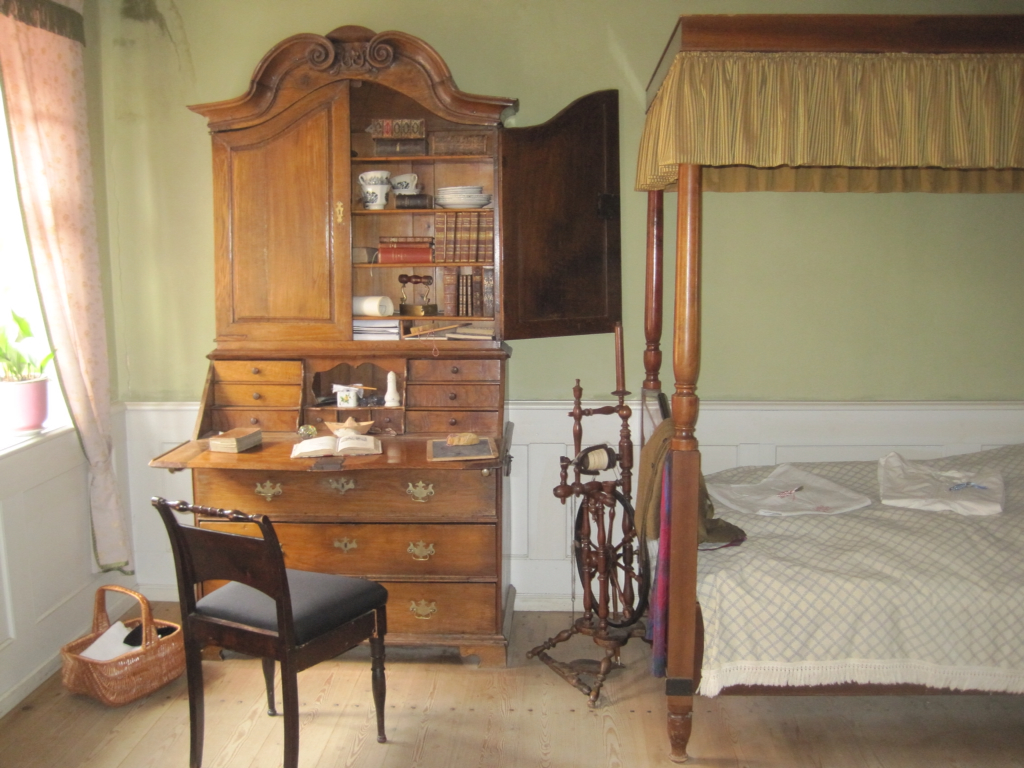
Yesterday we visited Den Gamle By (The Old Town) which is a heritage museum laid out as a fully-functioning self-contained 1700-1800s village. I was worried that it was going to be a tacky Sovereign Hill sort of experience (can you tell I'm not a big fan?) but it was AWESOME! I highly recommend a visit if you're ever passing through Aarhus and have several hours to spare - in fact, don't put anything else on your agenda, just come to Aarhus to visit the old town. We spent almost four hours there and it was only just adequate. It's a hands-on experience of life in a small Danish village, with demonstrations you are invited to participate in or to watch - chopping of timber by hand, not machine, to form even-shaped logs for buidling houses, woodworking and leatherworking using tools from the time, bricklaying, making wood joints, a blacksmith, a hatmaker, bookbinder, cabinet-maker, baker, clockmaker, goldsmith, a dyeworks, paint-maker, tailor, tobacco worker making cigars amongst the trades on show.


Children who visit are invited to help build a huge sailboat using old carpentry tools and guided in the necessary skills by craftsmen who have studied the art. Herbs are grown by the apoteker (today's equivalent would be a pharmacist) for medicinal purposes; vegetables are grown and chickens are kept by the vicar's wife who is happy to chat about her life.

There's even an amusement park where kids of all ages can partake of games which would have been enjoyed by children in those past centuries - horseshoe tossing, walking on wooden stilts, skittles, an organ-grinder, merry-go-round and interesting looking swings.

At lunchtime we sat outdoors and drank beer and cider but politely declined the grilled pølse (thick, spicy Danish sausages) with mustard in favour of a picnic lunch we'd brought with us - fresh crisp rolls with cheese, smoked salmon, tomatoes and boiled eggs.

We found time late in the afternoon to visit ARoS, the centre for visual art - the architecture of the building alone is worth seeing and is a spectacular structure visible from most of Aarhus city, mostly because of the "Rainbow Panorama" - this is a massive circular three-metre wide rainbow glass gallery which sits on narrow columns above the roof of the museum. You can walk around inside it in a 360 degree arc, viewing Aarhus through every colour of the rainbow.

ARoS showcases an exhibition of the works of New York artist Tony Matelli, whose statues are so highly realistic that you really have to get up close and almost touch some of them to convince yourself they are not flesh and blood. Amongst the many life-sized human representations, there's a sleepwalking girl in pyjamas, a guy sitting on a rock at the seaside playing guitar and a young man apparently levitating. There is also a fleeing mutilated couple who have various far-too-realistic injuries and a number of primates who clearly are meant to represent human failings.

The most noteworthy and impressive exhibit, though, for my money, is Australian artist Ron Mueck's, "Boy" - he is five metres tall and weighs 500 kilograms. What do you think?

Tomorrow we travel back to Copenhagen for one more day, before flying out to Kirkenes, a tiny village in the north of Norway, beyond the Arctic Circle and near the border of Russia. Adventures await!

D1


Friday, 14 September 2012

Frederiksborg Slot (Castle)

There is no shortage of castles and palaces in Denmark, not all of them in Copenhagen, but not too far away on the train.

Yesterday I took myself off to Frederiksborg Castle in the small town of Hillerod, about an hour north of Copenhagen. The castle itself looks like something out of a Disney adventure...lakeside setting, towers, a fountain, countless rooms and chambers spread over four floors, a huge and beautiful garden, a chapel and a great hall. The attached photos provide a little glimpse of the splendour of this place.

Our time in Copenhagen is now at an end, our next port of call being Aarhus in the Jutland region of Denmark, where no doubt we will post some more blogs.

D2


Busy, busy, busy!

We haven't blogged for a few days because we've been so busy, fitting lots of interesting things into our remaining few days here in Copenhagen.

We visited the Resistance Museum, which is a tribute to the role played by a group of Danish citizens who formed an underground movement to resist the Nazi occupation of their homeland. The museum has hundreds of fascinating exhibits, including printing presses, examples of newsletters, very emotional letters written home by prisoners, hand-made guns and other weapons, a torpedo, sketches and items smuggled out.

On Wednesday we walked to the Church of Our Savior and climbed the beautiful Baroque copper staircase which winds its way like a corkscrew around the outside of the spire. The 360 degree views of Copenhagen, including the wind turbines in the bay, were stunning.

Next on the schedule was a visit to Christiansborg Palace in the city, which houses the Parliament, Royal Reception Rooms where the Queen receives foreign ambassadors and important dignatories, the Prime Minister's Office and the Supreme Court. The palace's copper tower is the highest in Copenhagen, but the real eye-openers are the magnificently decorated rooms, particularly the Great Hall which is the largest room, and the dining room which is the setting for state dinners and royal events for as many as 400 guests. The walls are covered in woven tapestries the likes of which I've never seen before - 60 weavers took ten years to create these as a 60th birthday gift for the current Queen of Denmark. They are utterly breathtaking, bright and colouful, celebrating a thousand years of Danish history.

Yesterday, C and I went shopping at Field's shopping mall, the largest shopping centre in Scandinavia - I don't know how to account for the four hours we spent there, except to say that purchases were made and fun was had! When you're away from home, every item in every shop is more interesting and desirable than whatever's available at home - I know it often seems that way, but seriously everything in Copenhagen really is interesting and desirable and I constantly wish finances and luggage space were limitless. The hard part is knowing this is only the beginning of our trip and there are several weeks and three countries to go.

As I have no shopping mall photos (which is for the best) I'll now take this short break to insert some photos of deliciousness and a photo of a knitted bridge - the Danes love to "enhance" statues, monuments, bridges and public buildings - sometimes a top hat or a beret will mysteriously appear overnight on King Christian X's head, for example. Having said that, I'm told the knitting thing happens In other parts of the world and is called "yarn bombing". Oh, and there's a photo of the guards who passed us by in the street - every day they march down the street at midday on the way to the Changing of the Guard process at Amalienborg Palace. Most Copenhagen people don't even pay any attention, as it's just part of daily life.

We will return to normal programming after the break . . .

Danish pastries for elevenses
Spice stall at the local market
Bread selection at the bakery
Knitting on the bridge in Christianshavn
Nougat stall at the market


On TripAdvisor, the number one "must-see" in Copenhagen is listed as The David Collection. We thought that was a compelling enough reason for us to visit and the free admission wasn't to be sneezed at, after constantly having the wallet out for every exhibition, palace and tourist site over the past week. The founder, C L David, was a lawyer who had a private collection of artwork specifically Islamic art from the 8th to the 19th century, as well as collections of early Danish art and 18th century European art. The collection comprises thousands of items including beautifully presented silverware, paintings, sculptures, trinkets, jewellery, earthenware, pieces of ancient architecture and hundreds of old coins. These are housed in a rabbit-warren of rooms and tiny up-and-down staircases leading to dead ends. At the risk of sounding like a Philistine, I confess that after the first couple of rooms of "stuff" I felt claustrophobic and had had enough. It won't be number one on my own list of "must-see" attractions in Copenhagen.

Despite threatening weather we took a train out to the town of Roskilde today. It's about 25 minutes from the centre of Copenhagen and is famous for its stunning Cathedral built around 1170, when the art of brick making had only just been introduced to Denmark. Roskilde Cathedral is a UNESCO World Heritage site and is stunningly beautiful. I won't describe every aspect of it, but here are some of D2's great photos from today's visit.

Tuesday, 11 September 2012

Helsingor, Kronborg Castle, and Hamlet

Three trains and about an hour from Copenhagen is the town of Helsingor, a town of quiet laneways and busy pedestrian shopping streets, the UNESCO listed Kronborg Castle, and the setting for Shakespeare's Hamlet.

Helsingor is at the seaward entrance to the Baltic Sea, and for centuries ships of trade passing through the narrow stretch of water between Sweden and Denmark had to pay sound dues (taxes) to the rulers to guarantee their passage between England and the Baltic ports. The taxes collected over the centuries paid for the construction of Kronborg Castle, and the many subsequent additions and restorations.

Visitors to the castle can visit both the Casemates and the Royal Apartments. The Casemates are a network of underground chambers which served as soldiers' quarters during times of war, with space enough to house 1000 men, their horses, and enough supplies to withstand a six week siege.

The Casements are also home to the statue of Denmark's legendary hero, Holger the Dane, who sits dozing but ready to stir into action at anytime the Kingdom of Denmark is threatened by an enemy. Needless to say he hasn't moved in a very long time.

Kronborg Castle has been one of Denmark's most important fortifications through the ages, and the evidence of its past role can still be seen as you walk around the walls and ramparts.

William Shakespeare wrote his famous tragedy about Hamlet, Prince of Denmark around 1600 and set the play at Kronborg, which has helped to ensure the worldwide fame of the castle.

A short walk from the castle and you find yourself back in the busy pedestrian shopping streets of Helsingor where quiet cobblestone streets contrast with the more modern shopping plazas.

As I like to do, I will finish on a food theme, and today it will be cheese. I couldn't help but be amazed at the plentiful supply of all manner of cheeses, all of them at a fraction of the price that they can be bought for in Oz. What's not to like about Denmark?

D2

Monday, 10 September 2012

A walk in the park...and other places

Saturday in Copenhagen is a time when the locals come out to share in the delights of their city, and with the tourists adding to the numbers in the streets and cafes, there is a feeling of vibrancy that is not always evident in other cities.

My little Saturday sojourn started in the Stroget which is reputed to be one of the longest shopping strips in the world. There are shops of every shape and size selling everything from the cheapest imported souvenirs to the most expensive designer brands.

A short distance away is Nyhavn which abounds with restaurants, street musicians, tourist operators enticing people into buses and onto boats, and everyone grabbing the chance to enjoy a little bit of sunshine while enjoying lunch and a beer (or three).

Sometimes the activity is just overwhelming and you have to have a little lie down.

Moving on, I came across the sand sculptures, a member of the Royal Guard, Rosenborg Castle situated in King's Gardens, and a quick look into Sankt Paul's Church


After three hours of strolling the streets and waterways of Copenhagen, it was time for a small personal reward, an organic hotdog and a Nutella and banana crepe. A good day out while the girls were having their beauty treatments at the Illum department store.

D