Saturday, 12 November 2011

The Zeppelin - A Play in Six Acts

Oh, what a time we've been having!  As I mentioned in the last post, we have a story to tell, but it has been happening in parts and we wanted the whole thing to be through before we began to record it.

Setting
On Wednesday morning we had been looking (as we do) for the next location for our morning coffee and pastry habit (elevenses, if you will) and passed the open doorway of Zeppelin restaurant which had been on our carefully researched list of places to try for dinner.  There was a large board outside with a photograph of a chef, advertising Cooking Classes with Lorenzo, so David asked if I wanted to call in and make a quick enquiry about those while we were in the area. 


Act One
I went in, but there didn't seem to be anyone around, so I wandered out towards the kitchen, calling out, "Ciao!  Bongiorno!  Hello!" as I walked.  Lorenzo came out of the kitchen with a broad grin, held out his hand to me and said, "Ciao!  You want a coffee?"  I said, "No, no, I'm here to ask about the cooking classes."  "No, no," says he. "First we drink coffee, then we talk."  I said that my husband was waiting outside.  His response was, "Forget husband! Come on!  Just kidding!  Get husband!  Coffee time!"

I should have sensed that this was going to set the scene for how things would progress from that point.  To sum up, David came into the restaurant, we drank coffee with this insane, fast-talking, ebullient, passionately Italian captain of good food and wine and his young American intern Luke, from Texas, and we signed up for the two of us to have dinner in the restaurant that evening, to attend the cooking class on Friday afternoon, a tour with them of Orvieto's farmer's market early Saturday morning and a wine tasting on Saturday at noon.  Those who know David know that he really does not cook - he doesn't mind cooking, but he doesn't cook.  It's not his thing.

Not MUCH it's not his thing!  More on this later.

Act Two
Dinner on Wednesday night was a delicious theatrical experience.  To detail a couple of the dishes we enjoyed: hat-shaped pasta stuffed with shoulder of wild boar, served with a burnt butter, toasted hazelnut and sage sauce and ravioloni with asparagus and cheese filling served with black truffle and almond sauce. 


Desserts we shared were apple and raisin crepe with warm vanilla sauce and chestnut mousse.  The food was very good indeed, but the theatre component was that dinner guests were invited into the kitchen to watch elements of the food preparation and the sounds of laughter, shouting, singing and hilarity emanating from that area assisted in creating a very convivial atmosphere out in the dining area when patrons returned to their meals and chatted across tables like old friends.  Good fun!

Act Three
Friday afternoon we arrived at 3:30pm at the restaurant for the scheduled class, already knowing we would have a continuation of the fun that had been started on Wednesday night.  We met the other students who would be in our class with us, four young women from the U.S. who are in Rome for 3 months as part of their college studies and who had organised a couple of days in Orvieto to attend this class.

During the next four hours we made savoury fried bread pockets stuffed with salami and cheese, focaccia with olives and capsicums, pizza with tomatoes and mozzarella, gnocchi with parsley and radishes (yes, radishes), sausage, eggplant, mixed vegetable sauce, stewed wild boar with olives and tomatoes, tiramisu and biscotti. 


We also talked about the origins and elements of Italian cooking, we learnt (better) knife skills, we came to a better understanding of how a commercial kitchen functions, we nibbled on dozens of different sample dishes, we drank a large amount of prosecco and we laughed a lot.

Lorenzo was loud, funny, informative and totally in control of us all, plus his team of six interns, as well as the constant stream of business-related visitors, old friends dropping in for a chat and constant phone calls.  He was like an orchestra conductor, managing it all with great good humour and charisma, and David was his sous chef, having an absolutely brilliant time and learning a lot, as we all were.  I may have to fight him for the whisk and spatula when we get home. 

Act Four
At about 7:30pm we sat down to eat the fruit of our labours - needless to say none of us had an appetite because we had been snacking, sampling and drinking all afternoon, but we all wanted to see it plated up and eat it sitting down!  By then we had formed a good relationship with the girls and at dinner we chatted as though we had known each other forever, exchanging Italian travel tales and tips and hearing their interesting stories.  One of Lorenzo's former students, a young Columbian guy, who had dropped in to say ciao, sat with us (sat with the girls, if the truth be known) and Luke, the Texan intern, served us and chatted about his time at Zeppelin.  It was a wonderful meal and although we didn't actually finish a whole plate of anything, we felt very proud of our work - it looked and tasted very professional. 


Act Five
Saturday morning we all met again at Zeppelin before 8:00am to go to the open-air food market with Lorenzo, his young staff, the American girls, Lorenzo's girlfriend who had arrived from Boston, Lucky Phil (the Columbian) and a couple of other hangers-on.  We walked around the various stalls, where Lorenzo is clearly well-known, sampling the wares and buying food for the restaurant.  Trial samples as we walked around included roast stuffed suckling pig, olives, pecorino, hard Umbrian crackers, dried chestnuts, green leafy vegetables of unknown origin, buffalo mozzarella, chocolates, rice pudding tarts, very alcoholic peach-shaped doughnuts filled with custard and shots of a cinnamon-flavoured spirit.


We then dragged ourselves home for a rest... seriously!  We knew that we had to be back at the restaurant for the wine tasting at midday.

Act Six
The wine tasting was interesting in that it was conducted by a knowledgeable sommelier and we tried four local Orvietana wines - two whites and two reds.  Needless to say, there were accompanying plates of salumi, proscuitto, a selection of cheeses, breads and roasted artichoke dip.  We were joined for the tasting by three other people who are in Orvieto for a conference on... (wait for it)... torture recovery therapy.  I kid you not.  They are part of a group of 55 people from all over the world who are here to chat amongst themselves about their work with victims of imprisonment, abandonment and other shocking circumstances. 

After the wines and food had been consumed, Lorenzo presented us with our certificates, Zeppelin aprons, bags of biscotti and recipe booklets while we and the girls hugged each other, exchanged email addresses and promised to meet up in Rome in three weeks.

So, that's some of what we've been doing.  It has been absolutely brilliant fun.

D1

Thursday, 10 November 2011

Orvieto


As an introduction to Orvieto, I offer the above gratuitous night shots taken on our first evening here, after a little drizzling rain was sent down from above to cleanse the village on the occasion of our arrival. How pretty, eh?  Since Monday night we have had beautiful blue skies with not even a hint of a breeze to spoil the serenity.  Aah, the serenity!  Orvieto is a peaceful little town, by night and by day and we are already having a wonderful time, just relaxing into life here.

On Tuesday we climbed the Torre del Moro  (a medieval bell tower) which was worth the trip up, for the fabulous view of the town and surrounding areas, with farmlands, vineyards, forest-covered hills and even a castle or two laid out like the cliched (can't find the accent, sorry) patchwork quilt that defines Umbria.  


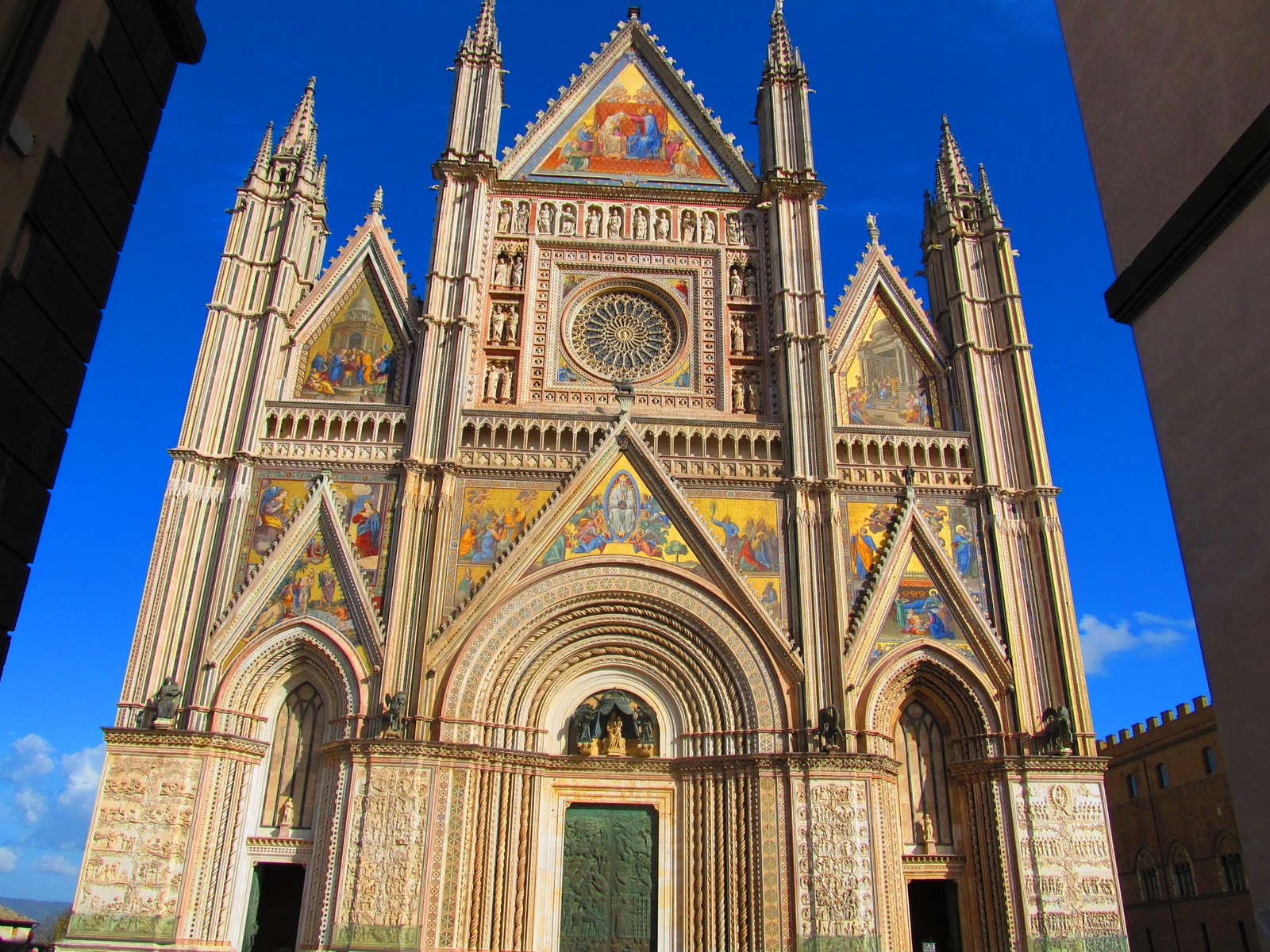
We then walked along the main street towards the Orvieto Duomo (Cathedral), the foundation stone of which was laid in 1290. It is a stunning piece of architecture to come upon as you wander down the small laneway towards it and against the colour of the sky behind it, the photo opportunity was too good to pass up.


Internally, the Cathedral was just as beautiful as externally (the presence of a number of vigilant foto police means you will have to take my word for that) but the facade (again, sorry, no cedilla) made up of millions of gold, blue and red mosaic tiles, each one as tiny as baby fingernails, is absolutely stunning.

Yesterday, we walked around the outskirts of the city walls to take in further wonderful photo opportunities.  :-)


Have I mentioned that I love Italian men?  If I haven't, then now you know.  Here are a few that I loved yesterday.  David didn't mind taking some photos of them for me to add to my pin-up wall, which was generous, no?


Notice that in the background of the second of those shots is a poster for a production of "Trappola per Topi", the very famous Agatha Christie play that we know as "Mousetrap".  We have tickets to see that on Sunday evening in the local theatre and yes, of course it is in Italian, so we will have to do a little homework before Sunday so that we know the storyline and will recognise the characters. When we went to the box office to purchase the tickets, the young lady was kind enough to allow us inside the theatre to see where we would be sitting. It does bear some architectural similarity to La Fenice in Venice, which we've already written about.

I do have another story to tell you, but I will save it for Saturday afternoon, because it is a continuing one and the final chapters of it have not yet taken place.  More on that, later.

D1

Tuesday, 8 November 2011

Rocky (the internet connection, not the boxer).

The internet connection here in Orvieto is indeed unstable, but we have set up the little computer in just the right spot to allow us a signal that's just OK.  This is only a post to say we arrived yesterday afternoon and that as far as we can see, Orvieto is a dear little medieval village.  There is a restriction on vehicular access, so that cars are parked outside the centre of town, making it very easy to walk around without having to worry about being run down, but also means that the village is a tranquil place to be.  Tiny shops line the main street and they all seem to sell quality products - artisan crafted leathergoods, beautiful clothes and shoes, gloves and hats, ceramics and so on.  There is an absence of touristy junk as Orvieto is a little bit off the main tourist trail, so that's a plus, too.

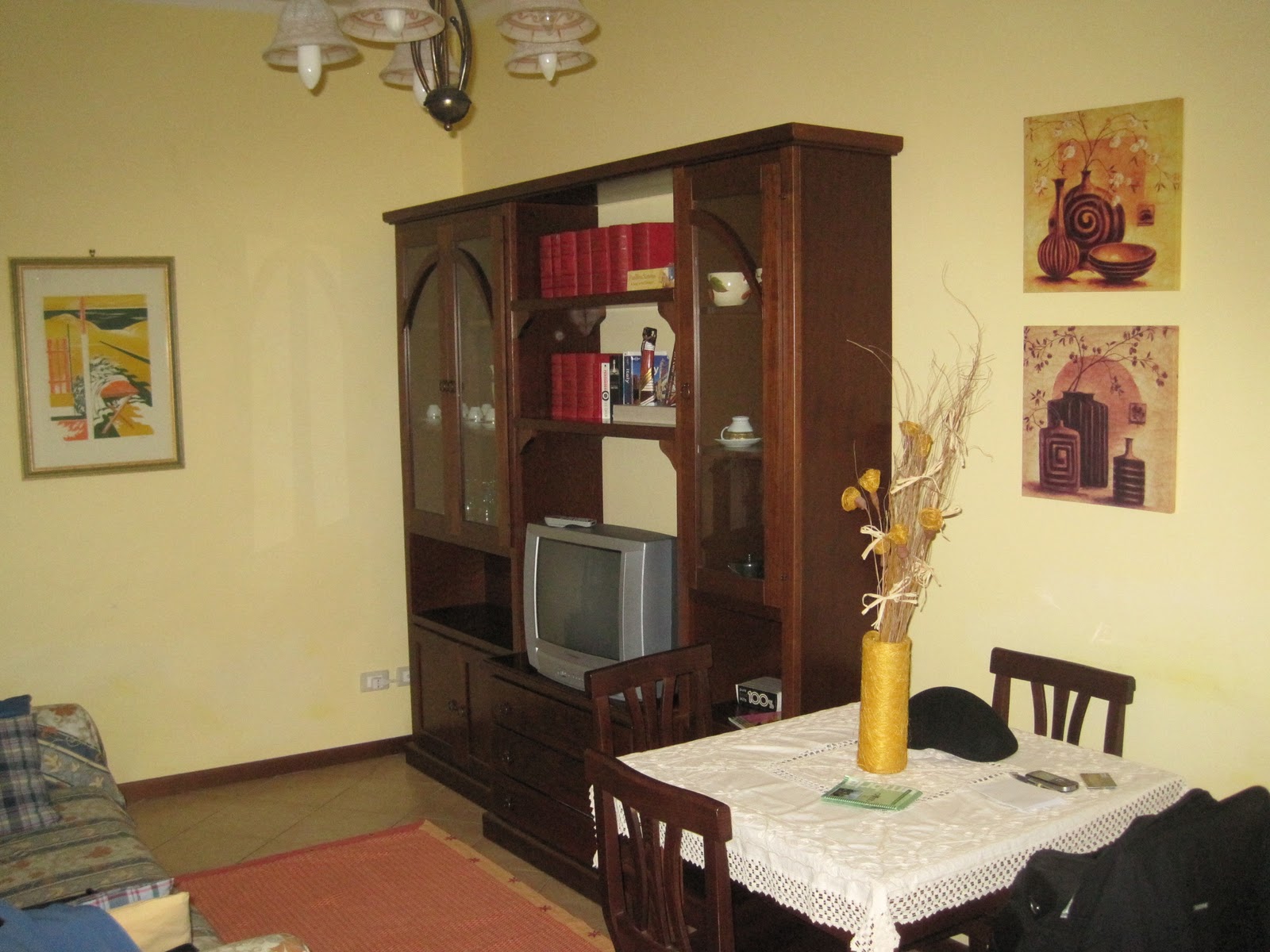
Our apartment is very spacious, with a large lounge room, separate kitchen, laundry, bathroom and huge bedroom (queen-sized bed plus day bed) opening out to our own sun-terrace.  Photos of the apartment below.  Going shopping now, but will blog again soon.


Sunday, 6 November 2011

John Denver and Other Musicians

Older readers may remember the John Denver hit, "Some Days Are Diamonds", the lyrics of which go on to say, "... some days are stone".  He was responding to a query about how he was feeling since his true love and he had parted company.  I guess you are wondering where this is headed.  Bear with me.

The lyrics to Denver's classic have famously been misheard as, "Some days are diamonds, some days are pearls..." being similar sentiment to the publicity line for Tourism Queensland (Beautiful one day, perfect the next).  In reflecting on our time in Padua, I prefer to quote the mondegreen (the line about the pearls).  It has been absolutely wonderful; perhaps some days even more wonderful than others.

See, I told you I would get there.

Tomorrow morning, clutching our pre-purchased train ticket, we will make our way to the stazione and board the train for our next destination, Orvieto, in the region of Italy called Umbria.  This region is known locally as "the green heart of Italy"; it is the only land-locked region and is famous for its emerald sloped mountains, rolling green hills, forests, tumbling rivers and lush farming land.  It will be quite different from the Veneto region, of which Padua is a main city. 

We will bid farewell tomorrow to the superb Giotto frescoes of the Scrovegni Chapel, the magnificent Basilica of St Anthony, the tranquil botanical gardens, the fresh food markets, the huge expanse of public space known as the Prato, the beautiful duomo, the coffee shops, the pastries, the wonderful sunlit piazzas and the stunning arched walkways.

We will also say goodbye (though not personally) to the tuxedo-dressed grand piano player, the old guy with the trumpet who plays "My Way" and "Hava Nagila" in a continuous loop, the chap with the piano-accordion who works his way around town, the 3-piece band of cellist, violinist and double-bassist and the fellow with the worn-out three-stringed guitar who plays and sings all day with his eyes closed. 

We will say one last firm, "No, grazie!" to the Senegalese guys selling handbags, cigarette lighters, packets of tissues, umbrellas, and watches and pass by the balloon man, the fire-juggler and the Charlie Chaplin statue impersonator, and we will walk right through the massive end-of-Autumn fare taking place today in the Prato towards today's other highlight, the Chestnut Carnival (hot roasted chestnuts and mulled wine included).  We will sit there with a glass of something and a plate of something, reflecting on all the things we will miss, then we will head back to the apartment to pack our bags in readiness for our early-morning departure.

I don't know how stable the internet connection will be, in Orvieto, so there may be a delay before you hear from us again (or not...).

D1

Wednesday, 2 November 2011

Venice (again).

If Padua wasn't wonderful enough in its own right (which of course it is), it would still have the wonderful advantage of being close to Venice, to recommend it to the traveller. 

I was reading on the internet a couple of nights ago, about an opera house in Venice ironically named Teatro La Fenice (Phoenix Theatre) which has been burnt down and rebuilt twice since its original construction in the late 1700s.  Although we have been to Venice a few times, the fact that it is only a 30 minute train ride from here means that it is not a big decision to say, "Let's go again.  We haven't seen that, yet!"  So, by 11:00 this morning we had already checked the weather forecast, had breakfast at home, walked to our railway station, caught a train to Venice, wandered across the Rialto bridge, bought a leather handbag, enjoyed hot chocolate and pastries for morning tea, and we were standing in front of Teatro La Fenice.

From the outside, the opera house is not particularly impressive, on the Italian "architectural amazingness" scale, but cross its threshold into the foyer and begin to be stunned.  The massive marble columns, marble floor and walls shine in the reflection of the many humungous chandeliers ... and that's just the beginning.  The theatre interior is superbly opulent, with inlaid wooden floors, red velvet seating, frescoed ceilings and gilded mouldings.


This second image is taken from an internet site, using much better camera equipment than ours - the photo has been taken from the stage, looking out to the audience.

The most recent rebuilding of La Fenice was only a few years ago (after being burnt to the ground by arsonists in 1996) so the luxuriousness of the place has not yet been tainted by the usual tourist legacy of worn carpet, scraped paintwork, stains and fingermarks.  In fact the whole building interior is blissfully fresh and clean, which seems almost out-of-place in Venice.  We were able to sit in the royal box and look at the stage from the same vantage point as important visitors, but even sitting in the downstairs seating area and looking about is a magnificent experience, despite there not being a performance on, this morning. 


There are several other spaces within the opera house building which are used for piano recitals and other types of performances.  This is one of those areas.


Following our visit to La Fenice we went up the Campanile di San Marco (bell-tower of St Mark's Basilica) which is probably the only "touristy" thing we hadn't yet done. The trip up is via a lift, which is a good thing, as the tower is around 100 metres in height.  The 360 degree view of Venice and surrounds from that vantage point is obviously breathtaking - this link gives one panoramic photograph but here are a couple of David's shots as well.  Although today was a bit grey, it was still well-worth seeing.


D1

Sunday, 30 October 2011

Vicenza

I had decided some time ago that I wanted to visit Vicenza, a city about 30 minutes by train east of Padua, and the capital city of the Veneto region. The city is mostly well-known for the number of buildings which are attributed to the architect, Palladio, who was busy during the last half of the 16th century - so well known in fact that the entire city has been declared a UNESCO World Heritage site. Palladio, who died in 1580, is best known for his final work, the Teatro Olimpico, which was not completed until 1595. The beauty of the interior, the design and construction of the stage settings, and the fact that the original wooden seats are still in use, make this a very special building.


The stage is designed to look like a Piazza with streets leading on to it

The elliptical design of the seats allows patrons to sit almost on top of the stage area
The depth of the stage is enhanced by the design and contruction of the scenery
Vicenza is rich with other fine examples of Palladio's work, mostly palazzos that have been purchased by banks, fashion brands and very rich individuals. It is also one of the few  cities visited on this trip that has some area devoted to parks and gardens and that makes for a nice change.


This weekend also sees the end of Daylight Saving for most of Europe, and despite the continuance of bright sunny days, the light is now fading at 4:30 in the afternoon, and there is starting to be a little chill in the air at night.

D2

Friday, 28 October 2011

Bologna for Lunch

The heading is not about the world famous sausage or the sauce (bolognese), both of which derive their names from the Italian city of Bologna.

We had decided to go to Bologna for lunch, a journey which takes about an hour an a half on the train. A booking had been made at Da Cesari, and upon arrival, we were not disappointed. I started with a delicious pumpkin ravioli which was cooked in a burnt butter sauce - simply delicious, while Debbie had a small flan made from locally grown mushrooms. Main courses were sea bass for me and lasagne for Debbie, again both courses beautifully cooked and presented. There was of course the home-made bread and olive oil, and an excellent bottle of Pinot Grigio followed by Zuppa Inglese and Crema Caramel then coffee and tea served with a very generous complimentary plate of three home-made sweet bites: tiny melt-in-the-mouth meringues, coffee-crusted sultanas and slabs of pistacchio brittle. The wonderful food, the ambience created by the restaurant's decor, the subtle background music and the highly efficient staff all contributed to a really great experience and made the trip to Bologna well worth the journey.


Bologna is one of the larger cities in Italy with a total urban population in excess of one million people, and it is also home to the oldest university in the world which was founded in 1088. The city is known for its kilometres of portici, or covered terracotta arcades, numerous churches of all shapes and sizes, a score of palazzos, piazzas and all the high end shops you can think of.


The entry to the centre of the city is along Via Dell'Indipendenza which leads to the Piazza Maggiore where the Basilica Di S. Petronio stands at one end of the piazza (all covered in scaffolding and sailcloth and no photos allowed) whilst on either side there are the Palazzo Re Enzo and Palazzo D'Accursio. Along the way there is the impressive statue of Garabaldi sitting astride his horse in the Piazza VIII Agosto.


Piazza Maggiore (built in XIII century) as seen from the top of the scaffolding on the Basilica Di S. Petronio
The Cattedrale Di S. Pietro just prior to arriving in Piazza Maggiore was very impressive, albeit relatively new in Italian terms, dating from 1575 when the main chapel was built, and completed in 1605.


Another small church discovered along the way was Chiesa San Benedetto, which despite its beauty, doen't even rate a mention in the official guide book to Bologna,  such is the plentiful nature of churches and other places of worship.

Chiesa San Benedetto
The only disappointment on the day was that the famous Fontana Del Nettuno stood forlorn in the Piazza Maggiore as dry as a chip. This fountain is considered by some to be the second most significant fountain in all of Italy (after the Trevi Fountain in Rome) and to see poor old Neptune standing there with all his parts exposed and without the opportunity of a cleansing shower left a bit to be desired.


D2

Sunday, 23 October 2011

Sunday in Padua

The shops are all closed and the streets are quiet, and yet every public space has an activity of some sort to engage the community.  In one, there is a stage set up for a trio of musicians to belt out tunes to an appreciative audience; in another there is a line of tents offering samples of local produce including cheeses, preserves, salami and even bowls of hot risotto!  A further square has been set aside for a parade of old cars, proudly driven through by their owners, each with a pretty Italian maiden in the front passenger seat, all dressed-up and ready to be photographed when they reach the other side and she positions herself alluringly beside the bonnet.  Every piazza is a little hive of activity and we repeatedly question what Robert Doyle (Melbourne's Lord Mayor) would make of it all.  We suspect such fun could never be had at home in the Nanny State.

No bikes, no vehicles and no people - all very peaceful
Via Belludi with Basilica di Sant'Antonio da Padova straight ahead.  The basilica was begun in about 1230 and completed the following century.  The bones of the saint lie in a marble-decorated chapel here.
A grand piano has been rolled out to entertain in Piazza Cavour - old and young gather to listen.  Cyclists stop and lean against their bikes, paying full attention, then mounting again and riding off.

Sculpture exhibition - this is in a former piazza which has been covered over with a glass roof and now houses a multi-storey gallery for artists of all kinds.  The architects have maintained the ancient columns and curved arches of the original area, but given it a new lease of life by converting it into this light, spacious public room.
An unexpected find - Chiesa di S. Gaetano - an absolutely magnificent church with an absolutely ordinary facade.
Arched colonnades - a feature of Paduan streets.
Chestnuts cooking in Piazza di Signori.  It is currently chestnut season and in most piazzas there is someone roasting them over an open fire, and everywhere there are people walking about with paper bags of hot chestnuts they are juggling from hand to hand while munching.  This fellow was charging five euros for 300g.  That's about AUD$6.70


D1 (text) & D2 (photos)

Saturday, 22 October 2011

@#&@#&# trains, long lunches and a trip to Treviso

The plan was fairly simple: catch the 9:29 am train from Padua to Mestre, change trains for Treviso, and be there by 10:15 am, allowing plenty of time to have a good look around, have some lunch, shop a little and then have a leisurely train trip home in the late afternoon.

Trenitalia had a different plan. The train left Padua on time, the sky was blue, there were plenty of seats available and plenty of time to make the connection in Mestre. Then the wheels fell off. The train from Mestre to Treviso didn't arrive for some reason unknown to us, and when a train destined for Treviso did arrive, it sat there not going anywhere until a train from some other destination arrived, disgorging hoardes of people, most of whom jumped on our train, and one minute later we left for Treviso, finally arriving at around 11:30 am.

After following some misdirections from a Macedonian waiter, delivered in German, we finally found the Informazione Touristiche and secured ourselves a mappa, went back to the Macedonian waiter and rewarded him by ordering coffee and brioche and then headed into the depths of the town only to discover that it was now lunchtime. Lunchtime in Italy can last from about 12:30 to 4:00 pm depending entirely on the hours which individual shopkeepers and businesses choose to operate within - the churches and Duomo were listed as having a respectful lunch break from 12:30 until 3:30 pm, the small shops from 1:00 until 4:00 pm but the market stallholders were all gone by 1:00 o'clock and they weren't coming back at all. The cafes, bars and restaurants stay open and make a killing.

So, what to do? Have lunch of course, and visit the natural attractions and  historical buildings that don't require a staff member to attend to you or sell you a ticket of some kind. That's when you discover that almost every noteworthy building or historical sight is covered in scaffolding and sailcloth to indicate that restorations are underway. Mind you, not a single workman has been sighted so far.

So, as the clock clicked slowly around to 3:00 o'clock we devised a new plan -  visit Chiese dei San Francesco, the Duomo, take in the shops on Via Calmaggiore and Piazza dei Signori and make a slow arc back to the station for the return trip to Padua. All is well.

Treviso is a small city (pop. 82,000) just north of Venice, and if the quality of the shops and the shopping can be used as a guide, it is a more affluent area than some others we have seen. The piazzas, streets and laneways, public spaces and buildings are all very beautiful, and it's a real shame that it is closed for so much of the time every day. Such is life in Italy.


We arrived back at the station in time for our train to Mestre, and then on to Padua. Only now we discover that there is a Trenitalia strike and no trains will run until after 5:00 o'clock, after which time, the tracks will be cleared and we will be on our way, first train out of the station. How do we know this? The conductor has boarded our train after we had sat motionless (the train, not us) for about 20 minutes at the station, made the announcement and made to leave. Deb springs into action and asks him to please repeat what he has just said in English.  "Englese?  No problema," he laughs, turning to a passenger sitting nearby and with just a shrug and upturned palms is clearly asking if the other guy can help out, which thankfully he does.

We finally get to Mestre, and it's a zoo. There are thousands of passengers, all stranded and all waiting for a train to somewhere, and nothing is either coming or going.

Needless to say, we arrived home very late, with the fairly simple plan for the day having not quite worked out.

D2